



On November 12, 2018, the European Parliament issued new rules to strengthen the fight against money laundering through the 6th EU Money Laundering Directive (2018/1673). Member States have until 3 December 2020 to transpose the Sixth AML Directive and bring into force the laws, regulations and administrative provisions necessary to comply with this Directive .
What are the objectives of the sixth Anti-Money Laundering EU directive (AMLD6) ?
The 6th Money Laudering Directive treats 4 main points.
1. A more complete definition of "criminal activity"
2. Expanded liability and sanctions for legal persons
3. A better international co-operation
4. Reinforced punitive measures
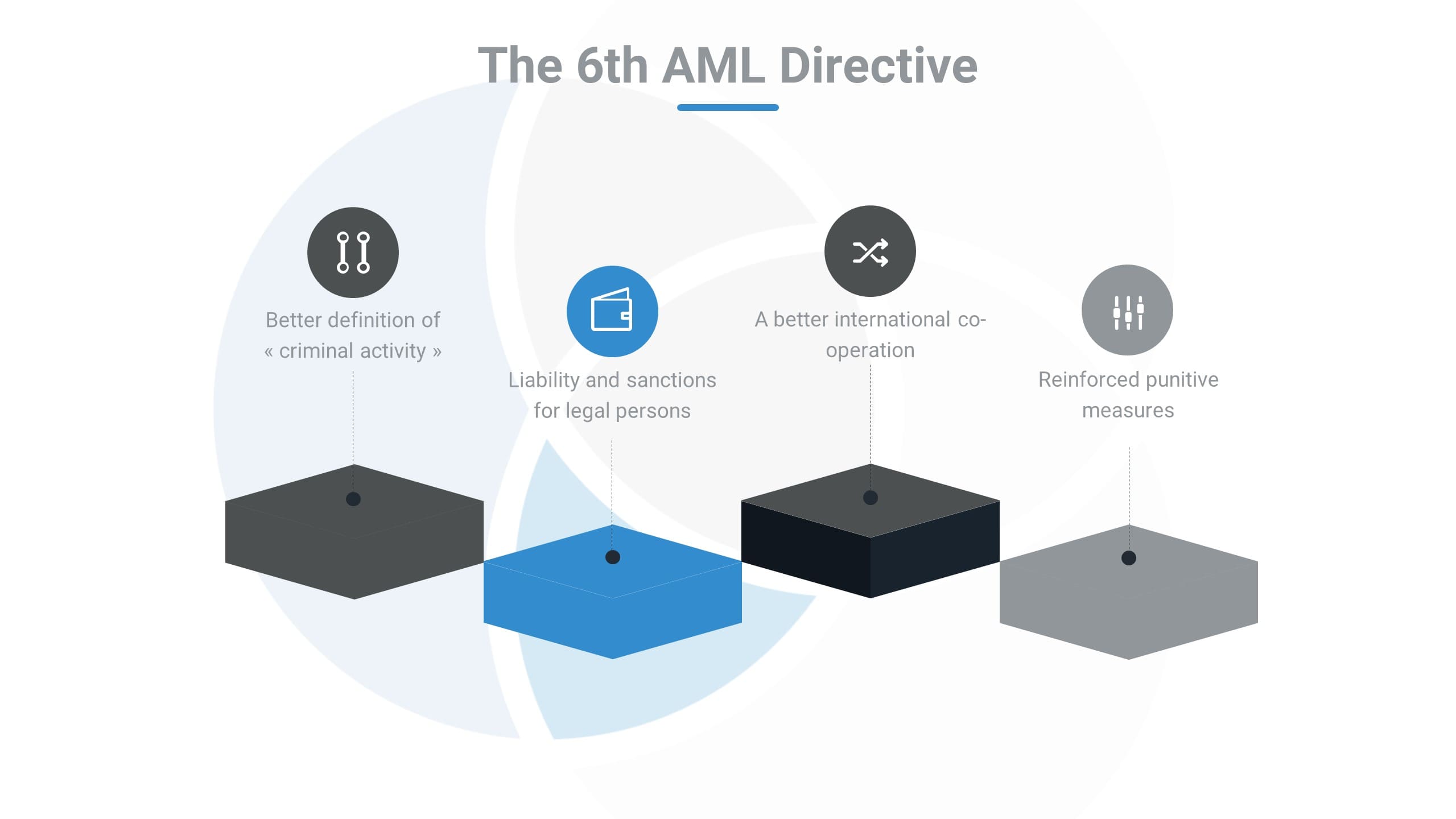
The objective of the new Directive is to harmonise the European framework and to subject money laundering in all Member States to effective, proportionate and dissuasive criminal penalties that cannot be sufficiently achieved solely by the Member States.
A more complete definition of "criminal activity" The 6th AML Directive issues a list of 22 offences for money laundering which all EU Member States must criminalise in their national legislation (unless already present in their penal code). This list includes cybercrime, environmental offences, tax offences, etc. The introduction of these new measures will have to be taken into account by companies, who will have to re-evaluate their mechanisms, processes and risk appetite.
Liability and sanctions for legal persons The AMLD6 expands the criminal liability to legal persons (companies, embedded partnerships) as well as individuals in some positions ( person with a power of representation of the legal person; having an authority to take a decision on behalf of the legal person or to exercise control within the legal person). Companies will need to review their internal controls and governance mechanisms to avoid any violations.
A better international co-operation The introduction of investigative tools and rules will make it possible to determine which Member State will be competent when an offence falls within the competence of several Member States. This will enable more effective and faster cross-border cooperation between Member States.
Reinforced punitive measures Punitive measures have been reinforced for individuals and some have been introduced for legal persons. The maximum term of imprisonment for money laundering offences will be at least four years. Member States should also ensure that they have additional sanctions or measures such as fines, temporary disqualification from social assistance, the temporary prohibition to engage in commercial activities, and the prohibition of holding a government job. With regard to legal organisations/persons, punitive measures include forfeiture of commercial activities, exclusion from access to public funding or even judicial liquidation. Companies will need to think about strengthening their anti-money laundering/counterterrorist financing efforts to reduce the risk of criminal prosecution.