



Imagine a situation in which the integrity of your organisation is corrupted by personal gain - how would you respond? In the field of business ethics, a strong conflict of interest program is the cornerstone that keeps an organization's reputation intact. With it, transparency isn't just a policy, it's a practice.
A conflict of interest occurs when an individual's interests, such as those related to money, family, clients, or social standing, could potentially get in the way of their professional obligations and decision-making. Conflicts of interest can arise in any sector, be it corporate, non-profit, academic, financial, pharmaceutical or governmental, and if not properly addressed, they can undermine trust, damage reputations, and lead to significant legal and financial repercussions. A robust conflict of interest (COI) program is not merely a regulatory requirement or a matter of compliance; it is a cornerstone of ethical conduct and good governance.
How to draft a strong Conflict of Interest policy
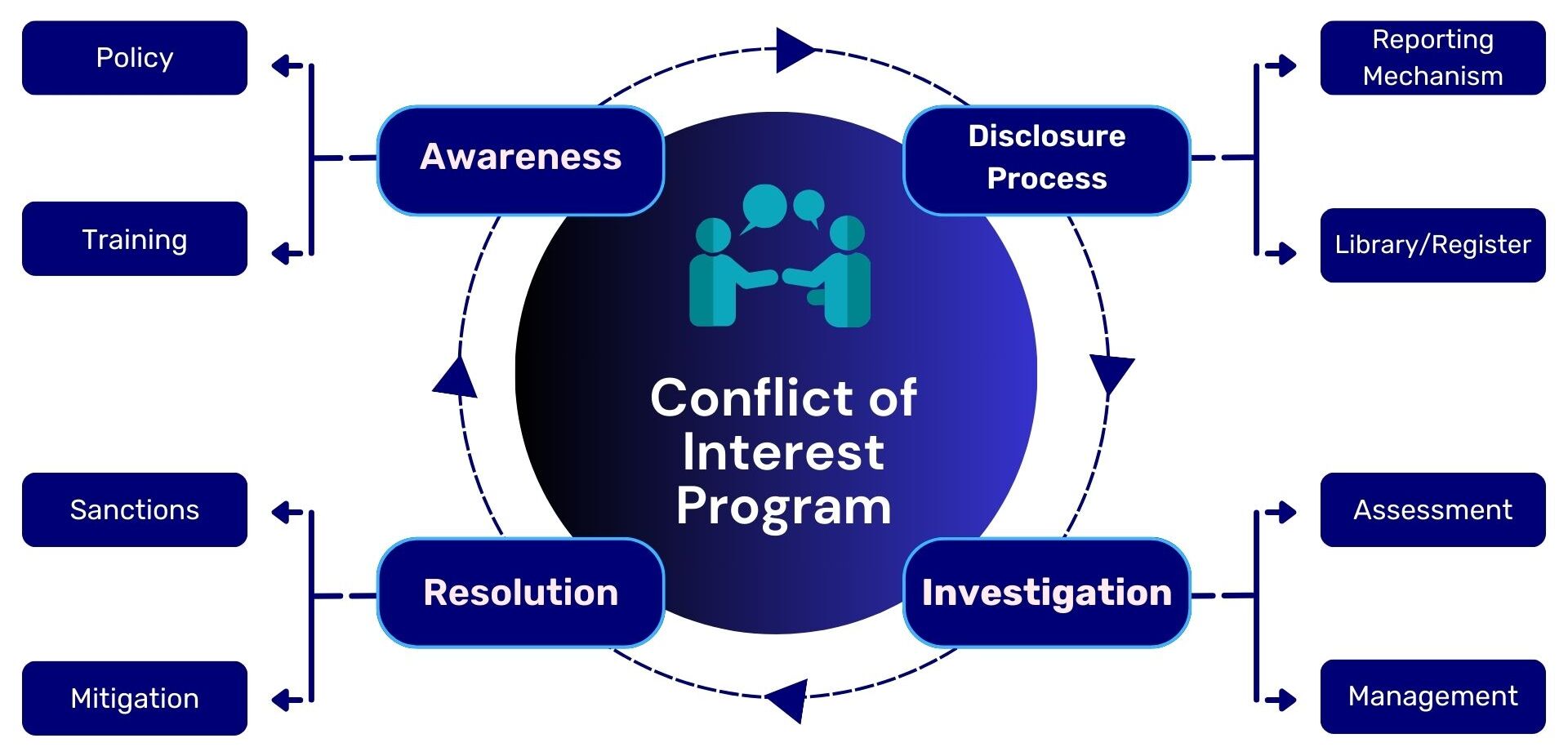
The first element in a COI program is having a strong policy. This document explains in detail what a conflict of interest is, how it is disclosed, and what steps need to be taken to manage or mitigate potential conflicts. The following elements should be present in a COI policy:
1. Clear definitions: provide a clear and comprehensive definition of what constitutes a conflict of interest. Include specific examples relevant to the organization to illustrate various types of conflicts.
2. Scope & applicability: specify who the policy applies to (e.g., employees, board members, contractors). Outline the contexts in which the policy is applicable (e.g., hiring, procurement, decision-making processes).
3. Disclosure process: detail the steps for disclosing a conflict, including who to report to and the format for disclosure.
4. Confidentiality: ensure that the disclosure process respects the confidentiality of the information provided. Include protections for whistleblowers to encourage reporting without fear of retaliation.
5. COI register: describe the COI register, its function, the stakeholders, and how it will be used.
6. Review & management: define the process for reviewing disclosed conflicts, including who is responsible for the review. Describe the actions to be taken to manage or mitigate conflicts, such as recusal from decision-making or reassignment of duties.
7. Sanctions: clearly outline the consequences of failing to disclose conflicts or violating the policy, including disciplinary actions.
Giving trainings on COI is essential for educating employees about identifying, disclosing, and managing potential conflicts. Yearly training sessions ensure that all staff members understand the organization's COI policies, the importance of transparency, and the procedures for reporting any concerns.
How to create a Conflict of Interest disclosure process
Click on the bubbles to explore the three main disclosure processes every COI program should have:
How to conduct a Conflict of Interest investigation
Conducting a COI investigation requires a structured and thorough approach to ensure fairness, transparency, and accountability. The first step is to gather all relevant information, starting with a detailed review of the initial disclosure. This involves collecting any supporting documents and identifying all parties involved, conducting interviews with the individual who disclosed the conflict, as well as any other relevant personnel. It's essential to maintain confidentiality during this process to protect the privacy of all parties and encourage honest communication.
After gathering the necessary information, the investigation team should analyze the data and determine whether the disclosed conflict violates organizational policies or ethical standards. The findings should be documented in a detailed report, including recommendations for mitigating or resolving the conflict.

Based on these recommendations, appropriate actions should be taken, such as revising roles or responsibilities, implementing oversight mechanisms, or applying sanctions if necessary. The outcomes and any implemented measures should be communicated to all relevant parties, ensuring that the resolution process is transparent and that lessons learned are incorporated into future COI management practices. Regular follow-ups should be conducted to monitor the effectiveness of the mitigation measures and to ensure ongoing compliance with COI policies.
CONFLICT OF INTEREST EXAMPLES
 |  |  |  |
|---|---|---|---|
An employee responsible for selecting suppliers awards a contract to a company owned by a close relative. | An employee works part-time for a competitor or another organization in the same industry. | An employee accepts expensive gifts or lavish hospitality from a vendor seeking favorable treatment. | A senior executive sits on the board of another company that directly competes with their employer. |
What sanctions are given for a Conflict of Interest?
Sanctions for conflicts of interest can vary depending on the severity and nature of the infraction. Common sanctions include formal reprimands, mandatory training on ethical conduct, reassignment of duties to eliminate the conflict, or temporary suspension.

In more severe cases, sanctions may involve demotion, reduction in salary, or termination of employment. Additionally, financial penalties may be imposed, particularly if the conflict has led to financial misconduct or loss for the organization.
The authority to impose these sanctions typically resides with senior management or a designated ethics committee within the organization. This body reviews the findings of the COI investigation and decides on appropriate disciplinary actions in accordance with organizational policies and legal requirements.
The tone from the top is crucial in managing conflicts of interest, as it sets a clear example of ethical behavior and commitment to transparency. When leadership consistently demonstrates and prioritizes integrity, it encourages the entire organization to follow suit, ensuring that COI policies are taken seriously and adhered to at all levels.
How to evaluate your Conflict of Interest program?
Evaluating your COI program involves a comprehensive assessment to ensure its effectiveness, relevance, and adherence to ethical standards. Begin by reviewing the program's policies and procedures to confirm they are clearly defined, up-to-date, and align with legal and regulatory requirements. Conduct regular audits to track the frequency and nature of disclosures, the timeliness of reviews, and the adequacy of management plans. Analyzing these metrics can identify trends and highlight areas needing improvement.
Additionally, gather feedback from employees through surveys or focus groups to understand their awareness of the COI policy, ease of disclosure, and perception of how conflicts are handled. Additional trainings or awareness campaigns may be needed if employees are not yet familiar with the concepts or are not confident using the reporting mechanisms.

Another critical aspect of evaluating a COI program is measuring its impact on organizational integrity and decision-making. Review case studies of disclosed conflicts to determine if they were managed effectively and if the chosen mitigation strategies were successful. Assess whether there have been any breaches of policy or incidents that went unreported, which may indicate gaps in the program. Regularly benchmark your program against industry best practices and standards to ensure it remains robust.